Why Your Sales Team Keeps Dropping the Ball and It Is Not Their Fault Your Sales Team Keeps Dropping the Ball and It Is Not Their Fault
If your sales team is missing follow-ups, losing lead information, or struggling to stay organised, the first thing most business owners do is blame the people.
They schedule more training. They set stricter deadlines. They add more check-ins.
And nothing changes.
Here is why. The problem is almost never the people. The problem is the system they are working inside.
When your sales tools do not talk to each other, your team ends up doing the work that your software was supposed to do automatically. They copy information from one platform to another. They check three places to find the latest version of a client record. They chase down whether a follow-up email actually went out or got stuck in a broken automation.
That is not a people problem. That is a systems problem. And adding more training to a broken system just makes people better at working inside chaos.
Let me show you what this actually looks like in a real business day.
A new lead comes in through your website form. Zapier is supposed to push that lead into your CRM. But Zapier had a hiccup overnight and the transfer did not complete. Nobody notices because there is no alert. The lead sits in your form submissions uncontacted for three days. By day three they have already signed with a competitor.
Or this one. Your VA pulls up the CRM to follow up with a prospect. The CRM shows the last contact was two weeks ago. But your email platform shows an email went out yesterday. The two systems are not in sync. Your VA does not know which one is telling the truth. They spend 20 minutes figuring it out before they can do anything useful.
These are not extreme examples. These are Tuesday mornings for most small businesses running on a patched-together tool stack.
The real cost is not just the wasted time. It is the compounding effect of small failures. Each missed follow-up, each confused handoff, each broken automation adds up. And because none of these failures are dramatic enough to cause an immediate crisis, they just become part of the background noise of running the business.
So what does the alternative look like?
The businesses that are consistently closing more leads and running leaner teams all have one thing in common. They stopped adding tools and started connecting what they already needed into one place.
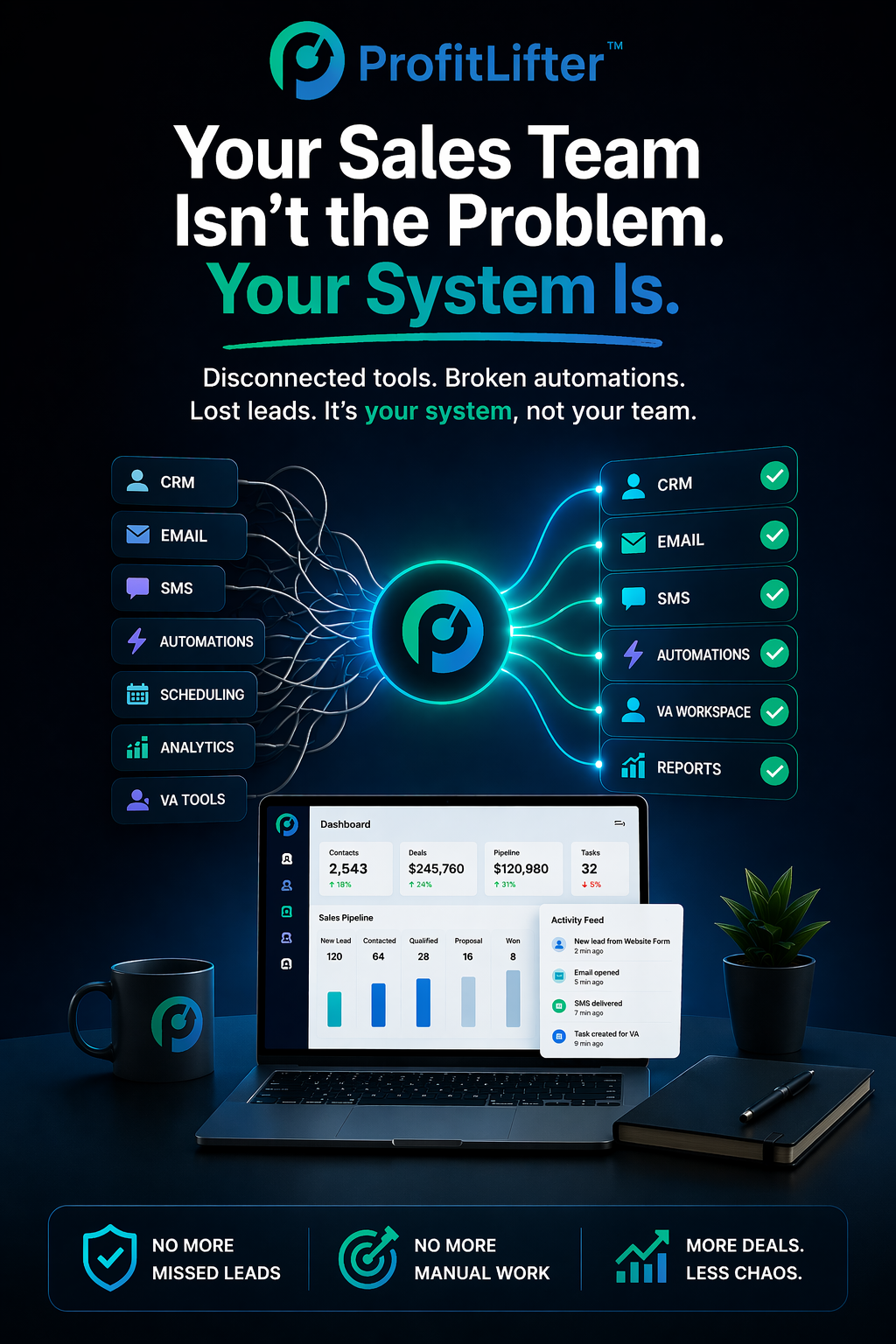
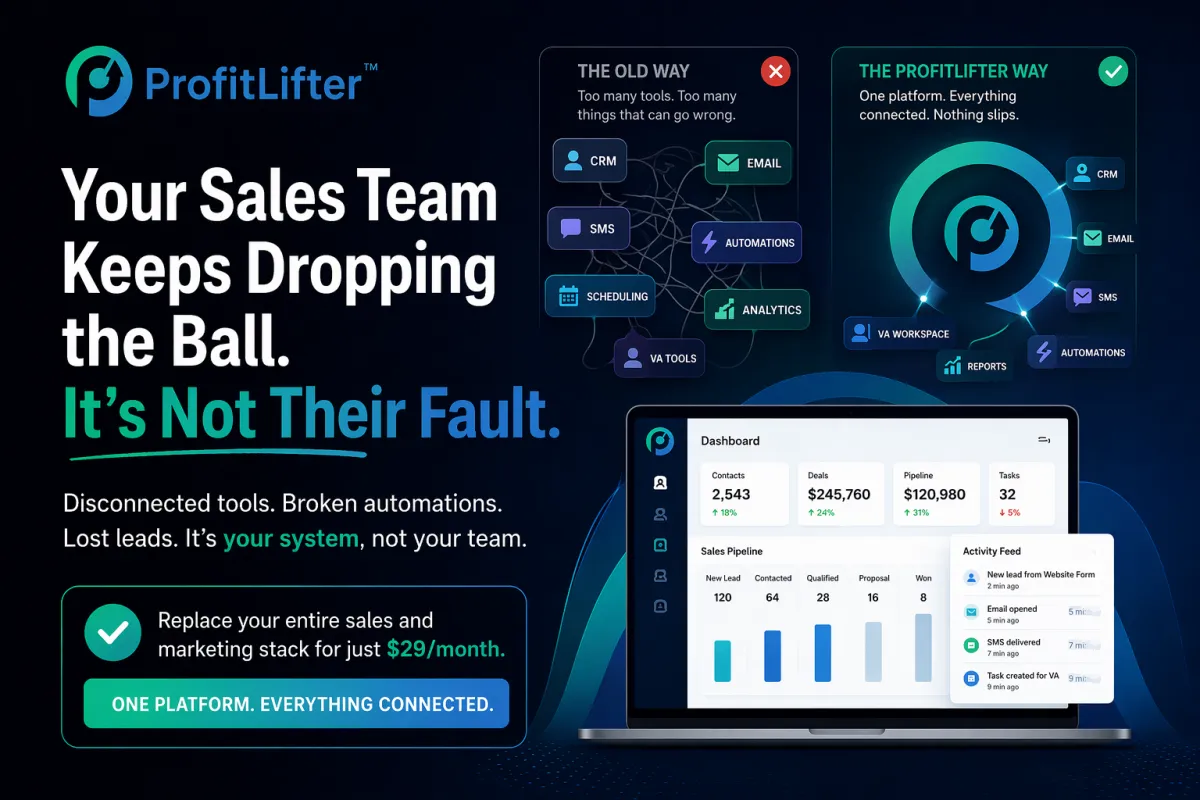
When your CRM, email platform, SMS, automation builder, and VA workspace all live inside the same system, a few things happen automatically.
First, data stays consistent. There is no lag between your email platform and your CRM because they are the same system. When a lead opens an email, the CRM record updates immediately. When a deal moves to a new stage, the automation fires instantly. No API call. No Zapier zap. It just works.
Second, your team gets clarity. Your VA does not need to figure out which platform has the right version of the client record. There is only one record. There is only one place to look. Your team stops spending the first 20 minutes of every day just getting oriented.
Third, follow-ups stop falling through the cracks. When everything is connected, nothing gets orphaned. A new lead that comes in at 11pm triggers a welcome SMS at 11pm and a CRM task for your VA at 9am the next morning. Automatically. Without you touching anything.
This is not futuristic technology. It is available right now and it does not require a big budget or a technical team to set up.
The entry point for a fully connected system that replaces your entire sales and marketing stack is $29 per month.
The most common response we get when people see the platform for the first time is something like: why did nobody build this sooner?
Because most software companies make more money when you use more of their separate products. A CRM company does not want you to replace your email platform with one of their features. They want you to integrate with an email platform and pay both of them.
Unified systems flip that model. One price. Everything included. You win when you close more deals, not when you add another subscription.
If you are running a sales team right now and things feel messier than they should, do yourself a favour before you schedule another training session. Look at your tools first. Count how many places a lead has to travel between your website form and your VA's task list. Count how many things have to go right for a follow-up to actually reach the right person at the right time.
If the answer is more than three, you have a systems problem. And the fix is not more training.
Frequently Asked Questions
Q: How many tools do most small businesses need for sales and marketing?
A: Most small businesses end up using between 5 and 9 tools for their sales and marketing. This includes a CRM, email platform, automation tool, scheduling software, VA portal, and analytics. A connected all-in-one platform can replace all of these.
Q: Why do sales automations break so often?
A: Most automations break because they rely on a connection between two separate systems. When one system updates or changes its API, the connection can fail. Automations built inside a single platform do not have this problem because nothing needs to connect to anything external.
Q: What is the difference between a CRM and an all-in-one sales platform?
A: A CRM stores contact and deal information. An all-in-one platform does that and also handles your email campaigns, SMS follow-ups, automations, VA workflows, and reporting. You do not need a separate tool for each function.
Q: How long does it take to get set up on a new sales platform?
A: Most teams using a well-designed unified platform are live and managing real leads within 72 hours. The setup is faster because there are no integrations to configure and no Zapier flows to build.
Q: Is a $29 per month plan enough for a real business?
A: Yes, when the platform is built properly. A $29 entry plan that includes a CRM, email campaigns, automations, and a VA portal replaces tools that individually cost three to five times more. Start at $29 and scale the plan as the business grows.
Q: What happens to my data when I switch platforms?
A: Most professional platforms allow you to import contacts and deal history via CSV files. The switch does not have to mean losing your existing data. The most important thing is to move to a connected system before your current stack causes you to lose more leads.